Ezekiel 12:1-16
The word of the LORD came to me: "Son of man, you dwell in the midst of a rebellious house, who have eyes to see, but see not, who have ears to hear, but hear not, for they are a rebellious house. As for you, son of man, prepare for yourself an exile's baggage, and go into exile by day in their sight. You shall go like an exile from your place to another place in their sight. Perhaps they will understand, though they are a rebellious house. You shall bring out your baggage by day in their sight, as baggage for exile, and you shall go out yourself at evening in their sight, as those do who must go into exile. In their sight dig through the wall, and bring your baggage out through it. In their sight you shall lift the baggage upon your shoulder and carry it out at dusk. You shall cover your face that you may not see the land, for I have made you a sign for the house of Israel."
And I did as I was commanded. I brought out my baggage by day, as baggage for exile, and in the evening I dug through the wall with my own hands. I brought out my baggage at dusk, carrying it on my shoulder in their sight.
In the morning the word of the LORD came to me: "Son of man, has not the house of Israel, the rebellious house, said to you, 'What are you doing?' Say to them, 'Thus says the Lord GOD: This oracle concerns the prince in Jerusalem and all the house of Israel who are in it.' Say, 'I am a sign for you: as I have done, so shall it be done to them. They shall go into exile, into captivity.' And the prince who is among them shall lift his baggage upon his shoulder at dusk, and shall go out. They shall dig through the wall to bring him out through it. He shall cover his face, that he may not see the land with his eyes. And I will spread my net over him, and he shall be taken in my snare. And I will bring him to Babylon, the land of the Chaldeans, yet he shall not see it, and he shall die there. And I will scatter toward every wind all who are around him, his helpers and all his troops, and I will unsheathe the sword after them. And they shall know that I am the LORD, when I disperse them among the nations and scatter them among the countries.
But I will let a few of them escape from the sword, from famine and pestilence, that they may declare all their abominations among the nations where they go, and may know that I am the LORD."
pearlie

Showing posts with label Torah. Show all posts
Showing posts with label Torah. Show all posts
Saturday, July 02, 2011

Sunday, June 05, 2011
People of the Book: A Novel

People of the Book, A Novel
By Geraldine Brooks (Penguin, 2008)
Words do not do justice to how I feel about reading this book. Just that of all the novels I have read in my entire life, this is certainly one of the most amazing one. The intrigue, the mystery, the inter-connections between the stories are astounding. And if you are a lover of historical fiction, I fully recommend you this book.
The story is wrapped around a real book or manuscript, the Sarajevo Haggadah.
A Haggadah is an illuminated manuscript that contains the illustrated traditional text of the Passover Haggadah, a Jewish text that used during the Passover meal. It contains the narrative of the Israelite exodus from Egypt, special blessings and rituals, commentaries from the Talmud, and special Passover songs. An illuminated manuscript is a manuscript in which the text is supplemented by the addition of decorations, illustrations and usually decorated with gold or silver.
Very little is known about the Sarajevo Haggadah. From the little known facts about the manuscript, Brooks has woven an amazing story around it. It revolves around a manuscript conservator as she was assigned to conserve the Haggadah. As she worked with the manuscript, she extracted "history" from in it, in the form of an insect wing, a feather, wine stains, salt stains, and a piece of white hair. The story of the Haggadah is then interwoven with the people in five stories of different times. I love the mystery and intrigue they tell.
And I must say that People of the Book this is a big volume; big not in the sense of the length of the book, it is after only 372 pages in print, but big in terms of the subject it holds. I learnt much about life as it was in Sarajevo with its religious diversity, with adherents to Islam, Orthodoxy, Catholicism and Judaism coexisting there for centuries. You will be amazed at how the people coexist there and how they hang on to their relationship despite their differences, the sacrifices the made,and the sufferings they had to endure. And yet, they held on to their friendship, with one another even though their differences and similarity of beliefs can steer them to unbelievable atrocities as it did happen in various levels in various parts of the world over the last few centuries. I also learnt, as I diverted here and there (to Wikipedia mostly), about the Spanish Inquisition, manuscripts preservation, and anthropodermic bibliopegy amongst others.
From the beginning of the book, I was mesmerized when the story was intensely into the conservation of the manuscript. It was interesting to get acquainted with the inks and the colours that we take for granted. Let me quote this paragraph in the book:
I turned a page. More dazzle. The illuminations were beautiful, but I didn't allow myself to look at them as art. Not yet. First I had to understand them as chemicals. There was yellow, made of saffron. That beautiful autumn flower, Crocus sativus Linnaeus, each with just three tiny precious stigmas, had been a prized luxury then and remained one, still. Even if we now know that the rich color comes from a carotene, crocin, with a molecular structure of 44 carbon, 64 hydrogen, and 24 oxygen, we still haven't synthesized a substitute as complex and as beautiful. There was malachite green, and red; the intense red known as worm scarlet -- tola'at shani in Hebrew-- extracted from tree-dwelling insects, crushed up and boiled in lye. Later, when alchemists learned how to make similar red from sulfur and mercury, they still named the color "little worm" -- vermiculum. Some things don't change -- we call it vermillion even today.
I just love how Brooks has put hard facts and delightful fiction together. It is a reader's haven. If you are into manuscripts, text, lives of the Jews, Muslims and Christians, mystery and intrigue, this book is for you.
One more thing about fiction that gets to me -- the ending -- it has to be perfect. And this book does not disappoint. It is not perfect perfect, but it was satisfying.
I will definitely read it again, and this round I will be able to recognize the "aha" portions, and I am looking forward to it.
pearlie
Sunday, January 18, 2009
Noah and Abram
As Pastorpher spoke from Genesis 15 today, where God made a covenant with Abram, I wonder about the background and the context to the choosing of Abram. Who was he? What did he do? Whom did he actually worship? Of all people why him?
Referring to Genesis 12, it was simply recorded that God said to Abram, "Go forth from your country, And from your relatives And from your father's house, To the land which I will show you; And I will make you a great nation, And I will bless you, And make your name great; And so you shall be a blessing; And I will bless those who bless you, And the one who curses you I will curse. And in you all the families of the earth will be blessed."
Abram went forth as the LORD had spoken to him. That was it. The author of Genesis do not provide us with anymore reasons as to why God had chosen Abram. There was no mention that he was the best candidate - he was just chosen. No criteria given.
In comparison, when God chose Noah in Genesis 6, Noah found favor in the eyes of the LORD. Noah was a righteous man, blameless in his time; Noah walked with God.
If I am not wrong the only difference between the two choosing is this: Noah's was because there was judgment to be meted out, and the only condition Noah met was that he was righteous, he walked with God. In the case of Abram, it was a case of a call to obedience. The were no conditions to obedience. God would just call, and it is to be obeyed.
So in that sense, no matter who we are, it does not matter to God, he chose us all to obedience. But when it comes to salvation, he chose only those who walk with him.
pearlie
Referring to Genesis 12, it was simply recorded that God said to Abram, "Go forth from your country, And from your relatives And from your father's house, To the land which I will show you; And I will make you a great nation, And I will bless you, And make your name great; And so you shall be a blessing; And I will bless those who bless you, And the one who curses you I will curse. And in you all the families of the earth will be blessed."
Abram went forth as the LORD had spoken to him. That was it. The author of Genesis do not provide us with anymore reasons as to why God had chosen Abram. There was no mention that he was the best candidate - he was just chosen. No criteria given.
In comparison, when God chose Noah in Genesis 6, Noah found favor in the eyes of the LORD. Noah was a righteous man, blameless in his time; Noah walked with God.
If I am not wrong the only difference between the two choosing is this: Noah's was because there was judgment to be meted out, and the only condition Noah met was that he was righteous, he walked with God. In the case of Abram, it was a case of a call to obedience. The were no conditions to obedience. God would just call, and it is to be obeyed.
So in that sense, no matter who we are, it does not matter to God, he chose us all to obedience. But when it comes to salvation, he chose only those who walk with him.
pearlie
Monday, September 22, 2008
My Journey with Leviticus
My journey with Leviticus in a way began when I was in my teens. I remembered that one time when I vowed to read the whole bible in a year stopped instead in Leviticus during the Chinese New Year. The reading became too mundane for an immatured soul. Soon I read a pastor's account of despair when he had to preach from the book according to the year's lectionary.
Calvin and I are currently going extremely slow in our daily bible reading and we are at the moment labouring through Leviticus. It is not easy. It is so repetitive that this evening, as I was reading the second half of Lev 14, Calvin began to echo me because it all reads so similarly.
In my first TEE module with Reb on The Introduction of the Old Testament however, I observed an interesting chiastic structure in the Pentateuch that centers in Leviticus. I know I am a chiasm-freak and I might be wrong but just humour me.
Genesis - leaving for the promised land
Exodus - the census and going out
Leviticus - worship of the one and only Yahweh
Numbers - the census and coming in
Deuteronomy - entering the promised land
After that, I was convinced that it is extremely important for us to study and know Leviticus, however mundane and repetitive it is, and again I say, it is very important that we do. When I was going through the Passion event with the youth yesterday, on the atonement, the only other passages I referred to was in Leviticus - where the foundation of the ultimate offering on the cross rests.
According to LaSor in his Old Testament Survey, "Leviticus is a picture window into ancient Israel's worship. From it we learn about the holiness of God. It unfolds the relationship between holiness and ethics, and even more it provides background for grasping the significance of Christ's sacrificial death" (p.91, 1996).
Given the fact that human continually sin, fellowship with the holy God required a means of access to God. Leviticus gives us a very good look into the sacrificial system that God had set in place, by which access to God was made possible. For one, it talks about the sinner's laying of a hand on the sacrificial animal's head as the animal is being sacrificed as an atonement for his sin, making it personal as the animal die in his place.
There is much to know and learn from Leviticus. The journey for me has barely begun.
pearlie
Calvin and I are currently going extremely slow in our daily bible reading and we are at the moment labouring through Leviticus. It is not easy. It is so repetitive that this evening, as I was reading the second half of Lev 14, Calvin began to echo me because it all reads so similarly.
In my first TEE module with Reb on The Introduction of the Old Testament however, I observed an interesting chiastic structure in the Pentateuch that centers in Leviticus. I know I am a chiasm-freak and I might be wrong but just humour me.
Genesis - leaving for the promised land
Exodus - the census and going out
Leviticus - worship of the one and only Yahweh
Numbers - the census and coming in
Deuteronomy - entering the promised land
After that, I was convinced that it is extremely important for us to study and know Leviticus, however mundane and repetitive it is, and again I say, it is very important that we do. When I was going through the Passion event with the youth yesterday, on the atonement, the only other passages I referred to was in Leviticus - where the foundation of the ultimate offering on the cross rests.
According to LaSor in his Old Testament Survey, "Leviticus is a picture window into ancient Israel's worship. From it we learn about the holiness of God. It unfolds the relationship between holiness and ethics, and even more it provides background for grasping the significance of Christ's sacrificial death" (p.91, 1996).
Given the fact that human continually sin, fellowship with the holy God required a means of access to God. Leviticus gives us a very good look into the sacrificial system that God had set in place, by which access to God was made possible. For one, it talks about the sinner's laying of a hand on the sacrificial animal's head as the animal is being sacrificed as an atonement for his sin, making it personal as the animal die in his place.
There is much to know and learn from Leviticus. The journey for me has barely begun.
pearlie
Wednesday, May 07, 2008
Any connections?
Genesis 3:6
When the woman saw that the tree was good for food, and that it was a delight to the eyes, and that the tree was desirable to make one wise, she took from its fruit and ate; and she gave also to her husband with her, and he ate.
Matthew 26:26
While they were eating, Jesus took some bread, and after a blessing, He broke it and gave it to the disciples, and said, "Take, eat; this is My body."
What do you think?
pearlie
When the woman saw that the tree was good for food, and that it was a delight to the eyes, and that the tree was desirable to make one wise, she took from its fruit and ate; and she gave also to her husband with her, and he ate.
Matthew 26:26
While they were eating, Jesus took some bread, and after a blessing, He broke it and gave it to the disciples, and said, "Take, eat; this is My body."
What do you think?
pearlie
Wednesday, February 27, 2008
I will harden Pharaoh's heart
Calvin and I are currently reading Exodus together, and we are now at the passages of the 10 plagues. When I was reading Exo 7:3, where the famous "hardening-of-the-heart" motif is found, this time, I thought of it differently.
I checked the limited resources I have on this verse and the interpretation of it is usually that Yahweh will deliberately make Pharaoh's stubborn so that his glory may be shown. A lot of people have a problem with that. I have a problem with that. But reading it this time, I see a different interpretation. Take a look of what I think and tell me what you think.
I began to read the hardening of Pharaoh's heart as a causal effect, not a purposeful God-intended act. What I mean is this: God heard the cries of the Israelites and it is time to rescue them. He wanted the Israelites to go into the wilderness to worship Him but Pharaoh refused. It will not be good for him to have all his kingdom stalled with his all slaves out of Egypt not working. But God wanted Pharaoh to know that He is God. So He shows him his power through Moses and Aaron. However, the more God showed him, the more Pharaoh become adamant and stubborn. The more God did, the more Pharaoh resisted. In this sense, it is not that God has purposefully hardened Pharaoh's heart but the more God revealed who He is, the more Pharaoh rejected him. What God has done, caused Pharaoh to harden his heart. Isn't this reminiscent of man's faith in general?
But, is this "new reading" of mine possible?
Take a look at the following verses in NASB version:
Exodus 7:3-5
3 "But I will harden Pharaoh's heart that I may multiply My signs and My wonders in the land of Egypt. 4 "When Pharaoh does not listen to you, then I will lay My hand on Egypt and bring out My hosts, My people the sons of Israel, from the land of Egypt by great judgments. 5 "The Egyptians shall know that I am the LORD, when I stretch out My hand on Egypt and bring out the sons of Israel from their midst."
Exodus 7:12-14
12 For each one threw down his staff and they turned into serpents. But Aaron's staff swallowed up their staffs. 13 Yet Pharaoh's heart was hardened, and he did not listen to them, as the LORD had said. 14 Then the LORD said to Moses, "Pharaoh's heart is stubborn; he refuses to let the people go.
Exodus 7:16-17
16 "You shall say to him, 'The LORD, the God of the Hebrews, sent me to you, saying, "Let My people go, that they may serve Me in the wilderness. But behold, you have not listened until now." 17 'Thus says the LORD, "By this you shall know that I am the LORD: behold, I will strike the water that is in the Nile with the staff that is in my hand, and it will be turned to blood.
Exodus 7:22-23
22 But the magicians of Egypt did the same with their secret arts; and Pharaoh's heart was hardened, and he did not listen to them, as the LORD had said. 23 Then Pharaoh turned and went into his house with no concern even for this.
Exodus 8:1-2
1 Then the LORD said to Moses, "Go to Pharaoh and say to him, 'Thus says the LORD, "Let My people go, that they may serve Me. 2 "But if you refuse to let them go, behold, I will smite your whole territory with frogs.
Exodus 8:15
15 But when Pharaoh saw that there was relief, he hardened his heart and did not listen to them, as the LORD had said.
If you carry on reading on the subsequent plagues, you will see the same pattern. God showing his power, and it is Pharaoh who hardened his heart because he just refused to believe. Isn't it quite clear?
pearlie
I checked the limited resources I have on this verse and the interpretation of it is usually that Yahweh will deliberately make Pharaoh's stubborn so that his glory may be shown. A lot of people have a problem with that. I have a problem with that. But reading it this time, I see a different interpretation. Take a look of what I think and tell me what you think.
I began to read the hardening of Pharaoh's heart as a causal effect, not a purposeful God-intended act. What I mean is this: God heard the cries of the Israelites and it is time to rescue them. He wanted the Israelites to go into the wilderness to worship Him but Pharaoh refused. It will not be good for him to have all his kingdom stalled with his all slaves out of Egypt not working. But God wanted Pharaoh to know that He is God. So He shows him his power through Moses and Aaron. However, the more God showed him, the more Pharaoh become adamant and stubborn. The more God did, the more Pharaoh resisted. In this sense, it is not that God has purposefully hardened Pharaoh's heart but the more God revealed who He is, the more Pharaoh rejected him. What God has done, caused Pharaoh to harden his heart. Isn't this reminiscent of man's faith in general?
But, is this "new reading" of mine possible?
Take a look at the following verses in NASB version:
Exodus 7:3-5
3 "But I will harden Pharaoh's heart that I may multiply My signs and My wonders in the land of Egypt. 4 "When Pharaoh does not listen to you, then I will lay My hand on Egypt and bring out My hosts, My people the sons of Israel, from the land of Egypt by great judgments. 5 "The Egyptians shall know that I am the LORD, when I stretch out My hand on Egypt and bring out the sons of Israel from their midst."
Exodus 7:12-14
12 For each one threw down his staff and they turned into serpents. But Aaron's staff swallowed up their staffs. 13 Yet Pharaoh's heart was hardened, and he did not listen to them, as the LORD had said. 14 Then the LORD said to Moses, "Pharaoh's heart is stubborn; he refuses to let the people go.
Exodus 7:16-17
16 "You shall say to him, 'The LORD, the God of the Hebrews, sent me to you, saying, "Let My people go, that they may serve Me in the wilderness. But behold, you have not listened until now." 17 'Thus says the LORD, "By this you shall know that I am the LORD: behold, I will strike the water that is in the Nile with the staff that is in my hand, and it will be turned to blood.
Exodus 7:22-23
22 But the magicians of Egypt did the same with their secret arts; and Pharaoh's heart was hardened, and he did not listen to them, as the LORD had said. 23 Then Pharaoh turned and went into his house with no concern even for this.
Exodus 8:1-2
1 Then the LORD said to Moses, "Go to Pharaoh and say to him, 'Thus says the LORD, "Let My people go, that they may serve Me. 2 "But if you refuse to let them go, behold, I will smite your whole territory with frogs.
Exodus 8:15
15 But when Pharaoh saw that there was relief, he hardened his heart and did not listen to them, as the LORD had said.
If you carry on reading on the subsequent plagues, you will see the same pattern. God showing his power, and it is Pharaoh who hardened his heart because he just refused to believe. Isn't it quite clear?
pearlie
Sunday, February 24, 2008
Interpreting the OT, Poetic Books - Day 6
We have Dr Lim Boon Hock, the Deputy Director of Methodist Christian Education as our speaker today, who gave us a sermon from Deut 6:1-25 on the lesson “that you, your children and their children after them may fear the Lord”. His emphasis was on the Word of the Lord, which will not return to Himself void but will accomplish that which pleases Him, and that we need to be saturated with the Word of God.
He says that we need to hear, read, study, memorise and meditate on the Word of God. Obviously that is not enough. We have to always be aware that we should not be satisfied with just listening to a sermon a week, even if we are disciplined in reading a passage a day. Nor should we be pleased or proud by just filling our heads with the results of the study of the Word, even if we remember the Word by hard. It also means nothing if we just have deep thoughts about the Word of God, and that's it, just deep thoughts. The Word means nothing if it is just heard, read, studied, memorized or meditated – it must be lived.
His interpretation of 2 Tim 3:16 is pretty good – the Word of God is profitable for progressive use:
Teaching – telling us what is right
Rebuking – revealing where and when we get it wrong
Correcting – showing how to get it back on track
Training in righteousness – instructing us to stay on the right path
According to Deut 1:2, we ourselves must first be taught by the Word of God, after which it is our duty to impress it on our children, and then onto the church and the wider community. A lot of parents these days leave it to the church and the Sunday School. We miss a lot if we do not do it, if we do not teach His Word to our children. I am glad I have got back into reading the bible together with Calvin, but I have to admit it is not easy. We do miss nights when we are just too tired to do anything else but to sleep. But we must press on.
One thing the speaker said had made me think: “God takes us out of our familiarity and out of our comfort zones to teach us great things.” This sounds familiar except that this time, it sounds rather poignant, for some very good reasons. I have recently been puzzling over two things: the understanding of the Messiah, and death and life after death.
If you notice my previous posts, I have been on the subject of Jews’ understanding of Scriptures. I have been reading and getting relevant books to give me some ground for thought. And what do you know, during this OT class, the subject of Messiahship was brought up and I began to now read the Gospels in quite a different light and with more questions. With the Jews expecting an earthly Messiah, what does it mean when the disciples said that Jesus is the Son of God? With this in mind, why was Jesus so hard on the disciples and even the authorities?
The second thing was as mentioned last week, I suddenly realized that death, afterlife, heaven and resurrection in the OT were not as I thought they were. My views on them were very much coloured by my own contemporary understanding as much as my view on Jesus as Christ were coloured by my belief and development as a Christian. In the midst of bereavement with my aunt’s demise just yesterday, and with Reb’s sharing of his stand on death, if I am not mistaken, as a sense of sleep until being awaken or resurrected at the Last Day, I have a lot to think about. In most Christian wake services that I have attended, I always have this peace within me, albeit resting on a bed of sorrow, that the one who has left us is now in God’s presence, in His bosom, is no longer suffering or in pain but safe and secure in the Lord. But, not so in this wake service, and what more, my aunt, whom I love and respect, have passed on. I was quite disturbed and at one point I did feel some fear – because the belief that I have always held is now shaken, regardless of whether it is right or wrong. This is why what the speaker had said about being out of familiar grounds and comfort zones struck me. While this may not the first time that God has taken me out of my comfort zone to teach me something, this one created a sense of dread in me. I had to keep reminding myself of the resurrection of Christ. Looks like I have got a lot to think about, and to relearn.
pearlie
He says that we need to hear, read, study, memorise and meditate on the Word of God. Obviously that is not enough. We have to always be aware that we should not be satisfied with just listening to a sermon a week, even if we are disciplined in reading a passage a day. Nor should we be pleased or proud by just filling our heads with the results of the study of the Word, even if we remember the Word by hard. It also means nothing if we just have deep thoughts about the Word of God, and that's it, just deep thoughts. The Word means nothing if it is just heard, read, studied, memorized or meditated – it must be lived.
His interpretation of 2 Tim 3:16 is pretty good – the Word of God is profitable for progressive use:
Teaching – telling us what is right
Rebuking – revealing where and when we get it wrong
Correcting – showing how to get it back on track
Training in righteousness – instructing us to stay on the right path
According to Deut 1:2, we ourselves must first be taught by the Word of God, after which it is our duty to impress it on our children, and then onto the church and the wider community. A lot of parents these days leave it to the church and the Sunday School. We miss a lot if we do not do it, if we do not teach His Word to our children. I am glad I have got back into reading the bible together with Calvin, but I have to admit it is not easy. We do miss nights when we are just too tired to do anything else but to sleep. But we must press on.
One thing the speaker said had made me think: “God takes us out of our familiarity and out of our comfort zones to teach us great things.” This sounds familiar except that this time, it sounds rather poignant, for some very good reasons. I have recently been puzzling over two things: the understanding of the Messiah, and death and life after death.
If you notice my previous posts, I have been on the subject of Jews’ understanding of Scriptures. I have been reading and getting relevant books to give me some ground for thought. And what do you know, during this OT class, the subject of Messiahship was brought up and I began to now read the Gospels in quite a different light and with more questions. With the Jews expecting an earthly Messiah, what does it mean when the disciples said that Jesus is the Son of God? With this in mind, why was Jesus so hard on the disciples and even the authorities?
The second thing was as mentioned last week, I suddenly realized that death, afterlife, heaven and resurrection in the OT were not as I thought they were. My views on them were very much coloured by my own contemporary understanding as much as my view on Jesus as Christ were coloured by my belief and development as a Christian. In the midst of bereavement with my aunt’s demise just yesterday, and with Reb’s sharing of his stand on death, if I am not mistaken, as a sense of sleep until being awaken or resurrected at the Last Day, I have a lot to think about. In most Christian wake services that I have attended, I always have this peace within me, albeit resting on a bed of sorrow, that the one who has left us is now in God’s presence, in His bosom, is no longer suffering or in pain but safe and secure in the Lord. But, not so in this wake service, and what more, my aunt, whom I love and respect, have passed on. I was quite disturbed and at one point I did feel some fear – because the belief that I have always held is now shaken, regardless of whether it is right or wrong. This is why what the speaker had said about being out of familiar grounds and comfort zones struck me. While this may not the first time that God has taken me out of my comfort zone to teach me something, this one created a sense of dread in me. I had to keep reminding myself of the resurrection of Christ. Looks like I have got a lot to think about, and to relearn.
pearlie
Monday, January 21, 2008
Abraham's Dilemma, God's Providence
It was an extremely long day today. I spent literally all the time I had on facilitating the training session for 20 participants, in giving lectures, facilitating discussions and moderating activities. I did not have much time for anything else. The session for the day started at 10:30am this morning and now at 11:30pm do it get to shut down my brain for the night. (I managed to log into my email and saw some comments posted here – just so you know, I’ve read them and will reply them but much later, when I can breathe again.)
The portion of Scripture for the day was from Genesis 22, on the offering of Isaac. I still have loads of questions concerning this passage but one thing that DA Carson brought up was something that I missed.
Gen 22:12, 14
He said, "Do not lay your hand on the boy or do anything to him, for now I know that you fear God, seeing you have not withheld your son, your only son, from me." … So Abraham called the name of that place, "The LORD will provide"; as it is said to this day, "On the mount of the LORD it shall be provided."
When I read the few verses as laid out above, I never saw the Christological significance of it. While Abraham had not withheld his only son from God and God has not withheld his only Son from us for our salvation. For God so loved the world that He gave His one and only Son, that whoever would believe in Him will not perish but will have everlasting life. Abraham said the Lord will provide and indeed, He has in the form of His son on the cross.
pearlie
Sunday, December 30, 2007
What do we treasure in our hearts?
Pastor Chris gave a very inspiring sermon today based on Exodus 33:12-23. The quality of our lives is determined by what we treasure most in our hearts. Learning from Moses, the thing he feared most is if the presence of the Lord does not go with him and with Israel. The treasure that Moses wanted the most is the presence of God. Without God, whatever we have however good and wonderful it looks or feel, will fail in the end.
What do we have in our hearts?
pearlie
What do we have in our hearts?
pearlie
Sunday, September 30, 2007
Stronger Hands
Pastor Chris gave another excellent sermon today from a popular text that I have not yet had the chance to dig in myself: Jacob's wrestles with God, in Genesis 32:22-32.
Taking a look at the passage in context:-

I am quite curious as to why a wrestling match was nestled in the passage about Jacob meeting Esau. Jacob remembers his encounted with Esau 20 years ago when he had tricked his elder brother of his birthright. Esau had been so incensed that he willed to kill Jacob after the passing and the mourning of their father. Now that Jacob is moving out from Laban's he will be passing close to where Esau was. He had to meet his brother. He was worried. He made preparations and proceeded to meet him, but before that happened, Jacob wrestled with God. Why?
I do not have any commentaries (at least not yet) on Genesis and I have to resort to the next best: http://www.bible.org/. Deffinbaugh said, "As biblical scholars have observed over the centuries, there is much in this episode that is cloaked in mystery." It is certainly good to know many have wrestled with this passage and now I can draw on their discoveries.
Notice some very interesting points to the event:
The man wrestled with him. Jacob did not initiate it, instead God initiated the conflict. Jacob is standing between his past struggles with Laban and the impending one with Esau. God wanted to show him that his real struggle is with God and not with men. If he had struggled with God and still held onto him, he will be able to face anyone.
The man can overpower him anytime but he did not do it till daybreak, they wrestled for hours in the night. And by just a touch, he dislocated Jacob's hip. God wanted to show Jacob who is he up against.
The man asked to be released at daybreak after dislocating Jacob's hip. This indicates that Jacob must have held on to him and not letting him go. Jacob wrestled with God and did not let go of God even at the last stage when he knew he has lost. He did not give up, but gave in to him and asked to be blessed.
The man asked for Jacob's name when Jacob asked for a blessing. Take note that 20 years ago, when asked the same question. Ravi Zacharias in Can Man Live Without God commented, "The last time Jacob was asked for his name, the question had come from his earthly father. Jacob had lied on that occasion and said, 'I am Esau,' and stole the blessing. Now he found himself, after many wasted years of running through life looking over his shoulder, before an all-knowing, all-seeing heavenly Father, once more seeking a blessing, Jacob fully understood the reason and the indictment behind God's question and he answered, 'My name is Jacob.' 'You have spoken the truth,' God said, 'and you know very well what your name signifies. You have been a duplicitous man, deceiving everyone everywhere you went. But now that you acknowledge the real you, I can change you, and I will make a great nation out of you.'
Greatness in the eyes of God is always preceded by humility before Him. There is no way for you or me or anyone else to attain greatness until we have come to Him.
The man dislocated Jacob's hipbone. This happens to be the strongest joint in the body. At the time when Jacob thought he was the strongest, God brought him back to reality.
We need to know that at times when we are sailing high thinking we are the best in the world, God will wrestle with us and he will not give up until we give in to him. As long as we do not surrender to God, he will wrestle with us till daybreak, till we realise who is in charge, who is God. The encouragement we can draw upon though is that God does not give up on us. He still chose us in our weaknesses and idiosyncracies. He can zap us in our weakness and even in our strength but instead he chose us.
I realise that God indeed is the one who starts wrestling with us. I may feel that I started the debate but I believe now how I would have started to debate and wrestle with God in any issues in my life must have been his nudging in the first place. He would be whispering to me, "this is not right" or "I think you better go talk to him" or "you need to work this out".
Prayerfully prevailing with God assures us of prevailing with men. If God is on our side, we cannot be overcome. This is what verse 28 was intended to convey to Jacob. In learning how to prevail with God, Jacob had also found God’s means of prevailing with men (Deffinbaugh).
pearlie
Taking a look at the passage in context:-

I am quite curious as to why a wrestling match was nestled in the passage about Jacob meeting Esau. Jacob remembers his encounted with Esau 20 years ago when he had tricked his elder brother of his birthright. Esau had been so incensed that he willed to kill Jacob after the passing and the mourning of their father. Now that Jacob is moving out from Laban's he will be passing close to where Esau was. He had to meet his brother. He was worried. He made preparations and proceeded to meet him, but before that happened, Jacob wrestled with God. Why?
I do not have any commentaries (at least not yet) on Genesis and I have to resort to the next best: http://www.bible.org/. Deffinbaugh said, "As biblical scholars have observed over the centuries, there is much in this episode that is cloaked in mystery." It is certainly good to know many have wrestled with this passage and now I can draw on their discoveries.
Notice some very interesting points to the event:
The man wrestled with him. Jacob did not initiate it, instead God initiated the conflict. Jacob is standing between his past struggles with Laban and the impending one with Esau. God wanted to show him that his real struggle is with God and not with men. If he had struggled with God and still held onto him, he will be able to face anyone.
The man can overpower him anytime but he did not do it till daybreak, they wrestled for hours in the night. And by just a touch, he dislocated Jacob's hip. God wanted to show Jacob who is he up against.
The man asked to be released at daybreak after dislocating Jacob's hip. This indicates that Jacob must have held on to him and not letting him go. Jacob wrestled with God and did not let go of God even at the last stage when he knew he has lost. He did not give up, but gave in to him and asked to be blessed.
The man asked for Jacob's name when Jacob asked for a blessing. Take note that 20 years ago, when asked the same question. Ravi Zacharias in Can Man Live Without God commented, "The last time Jacob was asked for his name, the question had come from his earthly father. Jacob had lied on that occasion and said, 'I am Esau,' and stole the blessing. Now he found himself, after many wasted years of running through life looking over his shoulder, before an all-knowing, all-seeing heavenly Father, once more seeking a blessing, Jacob fully understood the reason and the indictment behind God's question and he answered, 'My name is Jacob.' 'You have spoken the truth,' God said, 'and you know very well what your name signifies. You have been a duplicitous man, deceiving everyone everywhere you went. But now that you acknowledge the real you, I can change you, and I will make a great nation out of you.'
Greatness in the eyes of God is always preceded by humility before Him. There is no way for you or me or anyone else to attain greatness until we have come to Him.
The man dislocated Jacob's hipbone. This happens to be the strongest joint in the body. At the time when Jacob thought he was the strongest, God brought him back to reality.
We need to know that at times when we are sailing high thinking we are the best in the world, God will wrestle with us and he will not give up until we give in to him. As long as we do not surrender to God, he will wrestle with us till daybreak, till we realise who is in charge, who is God. The encouragement we can draw upon though is that God does not give up on us. He still chose us in our weaknesses and idiosyncracies. He can zap us in our weakness and even in our strength but instead he chose us.
I realise that God indeed is the one who starts wrestling with us. I may feel that I started the debate but I believe now how I would have started to debate and wrestle with God in any issues in my life must have been his nudging in the first place. He would be whispering to me, "this is not right" or "I think you better go talk to him" or "you need to work this out".
Prayerfully prevailing with God assures us of prevailing with men. If God is on our side, we cannot be overcome. This is what verse 28 was intended to convey to Jacob. In learning how to prevail with God, Jacob had also found God’s means of prevailing with men (Deffinbaugh).
pearlie
Sunday, August 26, 2007
Blessing
Rev Christopher Rao shared with us today a sermon for Genesis 12:1-3, the 4 C's of blessings.
Genesis 12:1-3 (ESV)
1 Now the LORD said to Abram, "Go from your country and your kindred and your father's house to the land that I will show you. 2 And I will make of you a great nation, and I will bless you and make your name great, so that you will be a blessing. 3 I will bless those who bless you, and him who dishonors you I will curse, and in you all the families of the earth shall be blessed."
This is first of the blessings that God annouced for Abraham, one more time in Gen 22:1-18, reaffirmed and reiterated every now and then as recorded in Genesis.
1. Circumstances
Have you not noticed that God somehow blesses us in the most unexpected circumstances? We may think that God will bless us in our best of times but is it not often that God blesses us in times we didn't think we will be? God blesses Abraham but before he did that, he wanted Abraham to leave the comfort and the security of his home, to a place not yet seen, but promised. Abraham with much faith, obeyed, and was blessed.
2. Challenges
Having a blessed life so to speak does not exempt us from life's challenges. On the other hand, the challenges will be the source of God's blessings for us. God chose someone from Israel to be the bearer of the seed, to be the father of all nations. Logic will have us choose someone young, strong and fruitful, who already has many children and able to bear more. But God chose Abraham and Sarah, old and barren. So that we know that it is God at work.
3. Choice
Abraham needs to make choices that reinforces God's blessings in his life. Almost throughout his whole life story in Genesis, he chose the way of God and looked to God, relying on him for everything.
4. Condition
There is a condition in which the blessing of God operates in. This condition involves the social dimension. The way we relate and interact with others will or will not result in blessings. And God works quite opposite the way of the world. While the world glorifies self-centeredness, always concerned about what's-in-it-for-me, God wants us to deny ourselves, and focus on others, to give and to bless. We are blessed so that we can be a blessing to others. What will it be for us?
pearlie
Genesis 12:1-3 (ESV)
1 Now the LORD said to Abram, "Go from your country and your kindred and your father's house to the land that I will show you. 2 And I will make of you a great nation, and I will bless you and make your name great, so that you will be a blessing. 3 I will bless those who bless you, and him who dishonors you I will curse, and in you all the families of the earth shall be blessed."
This is first of the blessings that God annouced for Abraham, one more time in Gen 22:1-18, reaffirmed and reiterated every now and then as recorded in Genesis.
1. Circumstances
Have you not noticed that God somehow blesses us in the most unexpected circumstances? We may think that God will bless us in our best of times but is it not often that God blesses us in times we didn't think we will be? God blesses Abraham but before he did that, he wanted Abraham to leave the comfort and the security of his home, to a place not yet seen, but promised. Abraham with much faith, obeyed, and was blessed.
2. Challenges
Having a blessed life so to speak does not exempt us from life's challenges. On the other hand, the challenges will be the source of God's blessings for us. God chose someone from Israel to be the bearer of the seed, to be the father of all nations. Logic will have us choose someone young, strong and fruitful, who already has many children and able to bear more. But God chose Abraham and Sarah, old and barren. So that we know that it is God at work.
3. Choice
Abraham needs to make choices that reinforces God's blessings in his life. Almost throughout his whole life story in Genesis, he chose the way of God and looked to God, relying on him for everything.
4. Condition
There is a condition in which the blessing of God operates in. This condition involves the social dimension. The way we relate and interact with others will or will not result in blessings. And God works quite opposite the way of the world. While the world glorifies self-centeredness, always concerned about what's-in-it-for-me, God wants us to deny ourselves, and focus on others, to give and to bless. We are blessed so that we can be a blessing to others. What will it be for us?
pearlie
Sunday, August 12, 2007
How are we defined?
Rev Christopher Rao’s sermon today was based on Exodus 5:22-6:12, basically dealing the lesson of looking to God and trust him on his big purposes. Life may not be the way we want it to be, it may go the other way than we have prayed and hoped for, but God knows what he is doing. How he dealt with Moses’ insecurity is case in point. God could have just given up on him, but stuck on with Moses. God would have just given up on the Israelites in their murmurings and complaints but stuck on with them (though not without consequences). God could have given up on us, but he stuck on, and gave his Son to die for us. Continue to hold on to him, no matter how life turns out at the moment. Depend on his grace, it is sufficient for us.
Exodus 6:6-8 (NASB)
6 "Say, therefore, to the sons of Israel, 'I am the LORD, and I will bring you out from under the burdens of the Egyptians, and I will deliver you from their bondage. I will also redeem you with an outstretched arm and with great judgments. 7 'Then I will take you for My people, and I will be your God; and you shall know that I am the LORD your God, who brought you out from under the burdens of the Egyptians. 8 'I will bring you to the land which I swore to give to Abraham, Isaac, and Jacob, and I will give it to you for a possession; I am the LORD.'"
pearlie
Exodus 6:6-8 (NASB)
6 "Say, therefore, to the sons of Israel, 'I am the LORD, and I will bring you out from under the burdens of the Egyptians, and I will deliver you from their bondage. I will also redeem you with an outstretched arm and with great judgments. 7 'Then I will take you for My people, and I will be your God; and you shall know that I am the LORD your God, who brought you out from under the burdens of the Egyptians. 8 'I will bring you to the land which I swore to give to Abraham, Isaac, and Jacob, and I will give it to you for a possession; I am the LORD.'"
pearlie
Friday, October 27, 2006
When you go over

Moses in Deuteronomy 12 gave charge to the Israelites laws and statutes relating to the worship of God. When I read Deut 12:8-12, it impressed on me as a message to us as Christians, awaiting the day when we will be in heaven with God.
So while we are here, 8 "You shall not do according to all that we are doing here today, everyone doing whatever is right in his own eyes, 9 for you have not as yet come to the rest and to the inheritance that the LORD your God is giving you. 10 But when you go over the Jordan and live in the land that the LORD your God is giving you to inherit, and when he gives you rest from all your enemies around, so that you live in safety, 11 then to the place that the LORD your God will choose, to make his name dwell there, there you shall bring all that I command you: your burnt offerings and your sacrifices, your tithes and the contribution that you present, and all your finest vow offerings that you vow to the LORD. 12 And you shall rejoice before the LORD your God, you and your sons and your daughters, your male servants and your female servants, and the Levite that is within your towns, since he has no portion or inheritance with you."
You shall not do according to all that we are doing here today
Looking into v.8, I do wonder why the change of personal pronoun: You shall not do according to all that we are doing here today. And what were they doing?
everyone doing whatever is right in his own eyes
This I suppose hold true at whatever age we are in, everyone doing whatever they feel is right. The latest news about the courts in NJ amending laws to allow gay marriage is a good example.
But when you go over ... he gives you rest from all your enemies around
We get final rest and protection from God, from problems, from persecution, even from our ownself.
to make his name dwell there, there you shall bring all that I command you
The place where God is will be full of worship: the four and twenty elders shall fall down before him that sitteth on the throne, and shall worship him that liveth for ever and ever, and shall cast their crowns before the throne, saying, Worthy art thou, our Lord and our God, to receive the glory and the honor and the power: for thou didst create all things, and because of thy will they were, and were created. (Rev 4:10-11)
And you shall rejoice before the LORD your God, you and your sons and your daughters
Oh! How we long to be finally in His presence, rejoicing, all of us. But while we wait for that Last Day, we strive hard to work out our salvation with fear and trembling (Phil 2:12).
Maeghan
Picture by Julia Freeman-Woolpert
Monday, October 16, 2006
Extend a hand to the lonely

Two are better than one, because they have a good reward for their toil. For if they fall, one will lift up his fellow. But woe to him who is alone when he falls and has not another to lift him up! Again, if two lie together, they keep warm, but how can one keep warm alone? And though a man might prevail against one who is alone, two will withstand him--a threefold cord is not quickly broken.
~ The Qoheleth (Ecc 4:9-12, ESV)
Little do men perceive what solitude is, and how far it extendeth. For a crowd is not company, and faces are but a gallery of pictures, and talk but a tinkling cymbal, where there is no love.
~ Sir Francis Bacon
Maeghan
Picture by Laura Kennedy
Wednesday, September 27, 2006
All Dried Out

It was a bad day today - all drives down to sheer incompetence. I am tired and I need a good rest. I went to the doctor just now and told him - I have a headache, a sorethroat and a sky-high level of stress. He laughed. He gave me a day off tomorrow - my long overdue day of rest, though I think I need more than one day to recuperate.
Noel has gone for the yearly bible conference, where I attended DA Carson's seminar and training on Psalms a few years ago. Wish I were there. This year, Chris Wright is here to talk about Deuteronomy.
I was reminded of the "remember's" in Deuteronomy.
(Deu 5:15) You shall remember that you were a slave in the land of Egypt, and the LORD your God brought you out from there with a mighty hand and an outstretched arm. Therefore the LORD your God commanded you to keep the Sabbath day.
(Deu 7:18) you shall not be afraid of them but you shall remember what the LORD your God did to Pharaoh and to all Egypt,
(Deu 8:2) And you shall remember the whole way that the LORD your God has led you these forty years in the wilderness, that he might humble you, testing you to know what was in your heart, whether you would keep his commandments or not.
(Deu 8:18) You shall remember the LORD your God, for it is he who gives you power to get wealth, that he may confirm his covenant that he swore to your fathers, as it is this day.
(Deu 9:7) Remember and do not forget how you provoked the LORD your God to wrath in the wilderness. From the day you came out of the land of Egypt until you came to this place, you have been rebellious against the LORD.
(Deu 9:27) Remember your servants, Abraham, Isaac, and Jacob. Do not regard the stubbornness of this people, or their wickedness or their sin,
(Deu 15:15) You shall remember that you were a slave in the land of Egypt, and the LORD your God redeemed you; therefore I command you this today.
(Deu 16:3) You shall eat no leavened bread with it. Seven days you shall eat it with unleavened bread, the bread of affliction--for you came out of the land of Egypt in haste--that all the days of your life you may remember the day when you came out of the land of Egypt.
(Deu 16:12) You shall remember that you were a slave in Egypt; and you shall be careful to observe these statutes.
(Deu 24:9) Remember what the LORD your God did to Miriam on the way as you came out of Egypt.
(Deu 24:18) but you shall remember that you were a slave in Egypt and the LORD your God redeemed you from there; therefore I command you to do this.
(Deu 24:22) You shall remember that you were a slave in the land of Egypt; therefore I command you to do this.
(Deu 25:17) "Remember what Amalek did to you on the way as you came out of Egypt,
(Deu 32:7) Remember the days of old; consider the years of many generations; ask your father, and he will show you, your elders, and they will tell you.
Maeghan
Picture by Voy K
Sunday, August 06, 2006
Genesis 24:1-57

Our pastor spoke today on the topic "To Set and Reach Your Goals" using Genesis 24:1-57 as basis for the lesson that "Eliazar’s search for a wife for Isaac illustrates the ten steps of successful goal setting". The ten steps are:
1. Determine your position
2. Define your purpose
3. Discover a promise
4. Describe the profit
5. Desire in prayer
6. Diagnose the problems
7. Design a Plan
8. Discipline your personality
9. Deposit the price
10. Depend on people
The pastor's current 2-month theme at the moment is "Super Successful Living". I can't say I am in line with his exegetical methods but he drew from the passage the verses that mention "success" or "successful" and came up with the 10 steps.
What other ways can one draw lessons from the passage? Here could be some possibilities:
1. Eliazar's obedience and oath of faithful service. Put your hand under my thigh (v.2) reflects the custom of the times where it represents a token of his subjection to Abraham as a servant, and of his readiness, willingness, and fidelity to execute any commands he receives.
We too should emulate the readiness and willingness of Eliazar in obedience and service.
2. Abraham's faithfulness and allegiance to God. You will not take a wife for my son from the daughters of the Canaanites ... see to it that you do not take my son back there (v.3-5). This portion of Scriptures reminds me of Psalm 1, Blessed is the man who walks not in the counsel of the wicked, nor stands in the way of sinners, nor sits in the seat of scoffers. Canaanites are said to be idolaters and very wicked people and Abraham made Eliazar swear that he will not bring home any Canaanites. While it would serve the Lord when we spend time helping the needy and troubled but to dwell in the midst of wickedness and partaking in it is unacceptable to God.
3. Eliazar's daring prayer. Let the young woman to whom I shall say, 'Please let down your jar that I may drink,' and who shall say, 'Drink, and I will water your camels'--let her be the one whom you have appointed for your servant Isaac. By this I shall know that you have shown steadfast love to my master." (v.14) I would say that Eliazar's prayer is really very bold and daring. His asking is so precise that any failure would send him back with nothing. But to put that into practice in our lives, how bold can we be in our prayers? Or would we pray in such a way that will force an answer for ourselves as we would like to have it? "I am the daughter of Bethuel the son of Milcah, whom she bore to Nahor." (v.24) Even though Eliazar's prayer was answered, he also had it confirmed.
4. Eliazar's worship. The man bowed his head and worshiped the LORD. (v.26) When Eliazar has received what he had prayed for, he never forget to worship God. A good reminder to us.
Maeghan
Picture by Johanna Ljungblom
Tuesday, July 18, 2006
The book of Leviticus
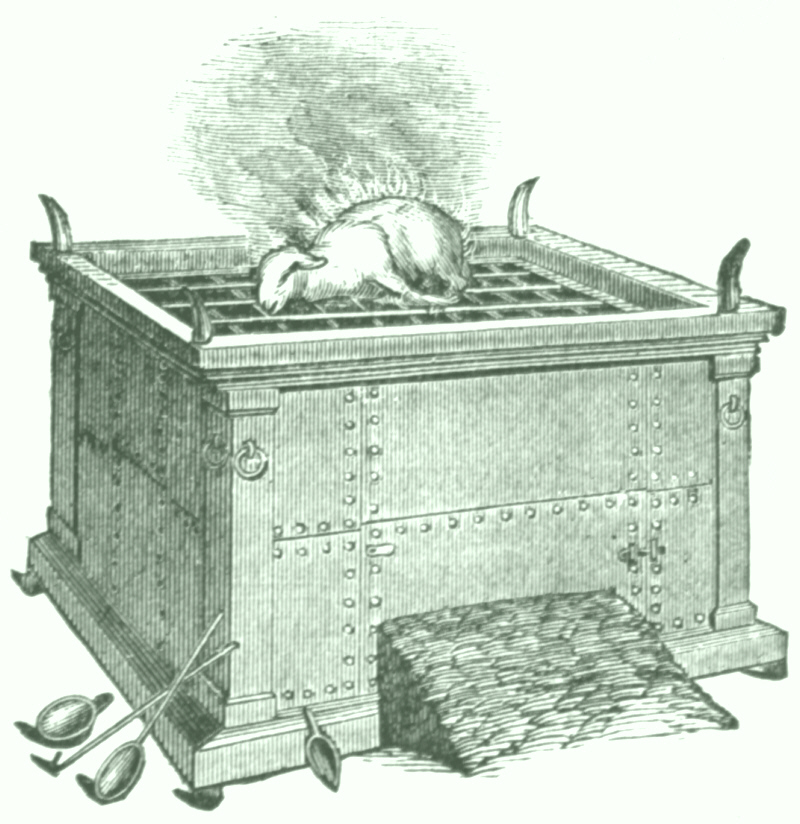 Leviticus used to be the first book that Jewish children studied in the synagogue. In the modern Church it tends to be the last part of the Bible anyone looks at seriously. … In practice then, though not in theory, Leviticus is treated as though it does not really belong to the canon of Scripture.
~Gordon J. Wenham, The Book of Leviticus (Grand Rapids: William B. Eerdmans Publishing Company, 1979), p. vii.
That rings so true. When I was younger, I would start reading the bible chapter by chapter in January and by the time I reach the Chinese New Year holidays, I would find myself in the book of Leviticus and there the goal of completing the bible in a year would go down the drain! Thankfully, by God's grace I did manage to read the entire bible several years ago, though there still much, much more to read.
The book of Leviticus now holds a very high priority in my study of His word, but there is so much to do, so much to read and so much to learn. In preparation for my sermon this Sunday though, I must at least read up some. I downloaded a bible study on the book from bible.org which turns out to be a 214 pages long pdf file!
The Book of Leviticus
Source: Robert L. Deffinbaugh, Th.M.
Some characteristics:
(1) Leviticus is largely a code book, a book of regulations.
(2) The Book of Leviticus is, to a great degree, a book of priestly regulations.
(3) The Book of Leviticus contains many regulations pertaining to the laity, as well as to the priests.
(4) The Book of Leviticus is a book of regulations which is given by God through Moses, spoken to him from the tent of meeting.
(5) The Book of Leviticus is essentially a narrative form of literature.
(6) Leviticus is closely connected with the entire Pentateuch, and especially with Exodus and Numbers.
(7) Essentially, Leviticus can be divided into two major divisions, separated by chapter 16, which deals with the annual day of atonement.
(8) Leviticus is quite frequently quoted or referred to, but in the Old Testament, perhaps no other book is more influenced by Leviticus than the prophecy of Ezekiel.
(9) Leviticus makes a great deal of some distinctions.
(10) Leviticus does not press the distinction between ceremonial holiness and civilian holiness.
Burnt Offerings
Some observations:
(1) The burnt offering does not originate in Leviticus, but is found early in the Book of Genesis.
(2) The burnt offering regulated in Leviticus chapter 1 was viewed primarily a personal offerings, done voluntarily by the individual Israelite.
(3) The burnt offering is one of the most common offerings, which is offered on a great variety of occasions, often in conjunction with another sacrifice or offering.
(5) The regulations for the burnt offering (as well as the other offerings) are very important, and violations are taken very seriously.
(6) There are three types of animals to sacrifice in the burnt offering.
(7) The animal to be offered in the burnt offering was always to be of the highest quality.
(8) There is an alternation between the activity of the priest and the offerer.
What it means to us based on 4 principles:
(1) The principle of man’s depravity
The burnt offering is not an offering for a specific sin but in association with other offerings. It is a reminder to the Israelites of man's depravity, to acknowledge and make provision for their sinfulness. Only through Christ, the Son of God who can take away the sins of the world.
(2) The principle of particularity
If the Israelite learned anything from the meticulous rules and regulations which God laid down for the burnt offering and all of the rest, it was that He is very particular about the way men approach Him. We can only come to God his way, Christ's way not our own.
(3) The principle of acceptance with God
God accepts us when we come to him in nothingness, in humility.
The bottom line is that the Bible portrays God’s acceptance as the highest good of all, and that making great sacrifice is worth the price to attain God’s favor. Let us see God’s approval as our highest good, and let us forsake all, including self-seeking and self-love to attain it. It is in our death, in Christ, that God is well pleased. It is in giving up our life that we gain life. And as Christians, no motive should be stronger than that of pleasing God, of hearing Him say to us in that day, "Well done, good and faithful servant."
(4) The principle of atonement through the shedding of blood
The sinful state of man is dealt with by the shedding of innocent blood, the blood of a sacrificial victim. The burnt offering communicates and illustrates this principle of atonement.
(5) The principle of identification
The one who was to benefit from the death of the sacrificial victim had to identify with that animal. It was, first of all, his animal, one that he had either raised or obtained at a price. The offerer places his hand on the victim as a symbol of identifying himself with it, which he killed in his place. In the same way, Christ died for us, an atonement.
(6) The principle of sacrifice
One of the unique contributions of the whole burnt offering is that it illustrates sacrifice in its purest form. A very valuable animal is given up wholly to God. Neither the offerer nor the priest gains much from the offering, other than the benefit of being found acceptable to God, which, in the final analysis, is the ultimate benefit.
Maeghan
Picture from Brian Nelson's Bible Audio Visual
Monday, July 17, 2006
The stairway to heaven

Genesis 28:10-15
10 Jacob left Beersheba and went toward Haran. 11 And he came to a certain place and stayed there that night, because the sun had set. Taking one of the stones of the place, he put it under his head and lay down in that place to sleep. 12 And he dreamed, and behold, there was a ladder set up on the earth, and the top of it reached to heaven. And behold, the angels of God were ascending and descending on it! 13 And behold, the LORD stood above it and said, "I am the LORD, the God of Abraham your father and the God of Isaac. The land on which you lie I will give to you and to your offspring. 14 Your offspring shall be like the dust of the earth, and you shall spread abroad to the west and to the east and to the north and to the south, and in you and your offspring shall all the families of the earth be blessed. 15 Behold, I am with you and will keep you wherever you go, and will bring you back to this land. For I will not leave you until I have done what I have promised you."
I am sure many of us have always felt that life is a never-ending upward climb, which is why whenever this thought came to me, I am always reminded of Jacob's dream, the Ladder to Heaven. God's word is what holds us together: For I will not leave you until I have done what I have promised you.
Maeghan
Picture by Bill Davenport
Saturday, July 01, 2006
These are the words 6:4
 I was in discussion with my uncle last week about the Introduction to Old Testament classes which he had attended a couple of weeks ago. I took this module in year 2003 and now that my retired uncle has all the time in the world (other than his 'compulsory' golfing), I kept telling him he should go for the class. With some more push from the Dean of the Seminary, whom we both know, he attended classes and I think he really enjoyed it.
This reminded me of some interesting things I learnt 3 years ago.
For one, the names of the books in the Pentateuch in Hebrew takes on the very first word of the book; we find this quite odd.
Genesis, בראשית Bereshith, In the beginning
Exodus, ואלה שמות Ve-Elleh Shemoth, These are the names
Leviticus, ויקרא Vaiyikra, And he called
Numbers, וידבר Vaidabber, And he spoke (but in most Hebrew Bibles its running title is במדבר Bemidbar, in the wilderness, which is the fifth word in the first verse)
Deuteronomy, אלה הדברים Elleh Haddebarim, These are the words
Imagine refering to the first five books of the bible: In the beginning 3:3, These are the names 10:1, And he called 18:2, And he spoke 6:24-26 and These are the words 6:4.
Maeghan
Picture by Rado Nachev
Subscribe to:
Posts (Atom)