Showing posts with label Books. Show all posts

Monday, November 29, 2021

I want to have a boring life

I don't like any adventures or worse, any problems in life, and so can I decide to have a boring life? Or is it too self-serving?

A peaceful mediocre life is a good life...can I call it contentment?

I have read this book 6 months ago but I do have a very bad memory and I cannot remember what's in it. So looks like I will have to read it again.

The Power of Christian Contentment: Finding Deeper, Richer Christ-Centered Joy
by Andrew M. Davis

Pearlie

Saturday, November 27, 2021

Hope in a World Gone Mad

Faith Among the Faithless: Learning from Esther How to Live in a World Gone Mad
by Mike Cosper 

I was saying that I was in a book binge, but this would probably be the last book of the binge: 7 books in 7 days.

What attracted me to the book when I bought it would be the phrase "world gone mad". Although how each of us would say how the world has gone mad would be different, it has certainly gone mad. However, looking at it from a broader perspective, it went mad a long, long, long time ago.

So what do we learn from Esther in this world gone mad?

What I appreciate about the book is that it tries to read Esther from its original context and it does not give us a very good picture. You will see that Esther and Mordecai takes on a very different life in the exile compared to Daniel. Whilst Daniel separated himself and maintained his life of being a Jew, Esther and Mordecai assimilated quite fully into theirs. 

And it is a well-known fact that God is not mentioned in the book of Esther any yet according to Cosper, what "the book of Esther tells us, is how God sometimes shows up. In the silence. In absence. In the darkness of doubt, humiliation, and loss. In the most unlikely ways possible, the miracle of grace manifests. It is precisely God’s hiddenness that makes this story so hopeful. Whatever dark place you are in today, whether by hapless circumstance or by your own actions, God hasn’t forgotten you. Esther’s story invites us to cling to hope, however small, and to confidence that whatever evil might currently reign, the story of God isn’t finished."

We can still hang on with hope and faith in midst of the madness we encounter. A lot of things are way beyond our control anyway. 

But remember, God is not finished with us.

Pearlie

Wednesday, November 24, 2021

Why the Tree of the Knowledge of Good and Evil?

I know we binge on TV shows but have you experienced a book binge before. It's like when you finish one, you need another. 

And that was when I finished a book last night, I went searching for another and found this. It's now one of the best books I read.

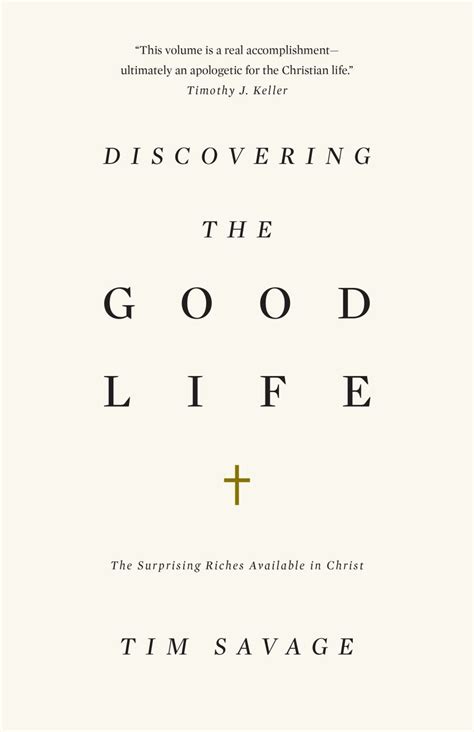
Discovering the Good Life: The Surprising Riches Available in Christ
by Tim Savage

It was so good that I finished it in one night. 

Tim Savage began the book by asking the question, "What is so good about life?", and he got me hooked from there on.

He looked at our lives from the perspective of three trees:
1. The Tree of the Knowledge of Good and Evil
2. A Shoot from the Stump of Jesse
3. The Tree of Life 

I always have a question about the tree of the knowledge of good and evil, on why is it there to begin with. Why put a tree there to tempt Adam and Eve? And knowing that they will succumb to it anyhow? 

I think Savage has finally answered the question for me. 

He said that God, in the creation of the universe and the world, has lavished himself on humanity. He poured out and provided it all through his providence and creativity. And the gift of this tree is where God's "generosity rises to unimaginable heights." 

Really? How so? Since it "bears within its branches the forbidden fruit with the power to rain doom on humanity," how can it be God's generosity that rises to unimaginable heights?

It is this very tree that plays an important role in the lives of human beings, Savage said. It is because God is love. And this love of God calls for a response. How will Adam and Eve return it? Will God be enough for them without needing to want "more" than God? 

"By opting for the orchard, humans return God’s love. By opting for the forbidden fruit, they reject it."

Now I am finally clear why the tree is in the Garden of Eden.

Pearlie

Tuesday, November 23, 2021

Friends: the greatest of worldly goods and the chief happiness of life

I did say that I'm addicted to the TV but I'm in a reading phase right now, finishing 4 books in just 2 weeks.

And since I'm in the groove, after finishing a book yesterday night, I went hunting for another and this book caught my eye. I bought it and started on it immediately. 


Made for Friendship: The Relationship that Halves our Sorrows and Doubles Our Joy
by Drew Hunter

I'm already three-quarters way through and found it very good. I'm also glad that it coincides with my desire now to reconnect with my friends whom I have not spoken to for the longest time, what with the pandemic and all. So it is good that I get to be more thoughtful as I do so.

The book touches on the necessity of friendship, the gift of friendship and the redemption of friendship. 

And one thing that does strike me is one of the deterrents to making and forming friendship - busyness. We are usually too busy for our friends.

Hunter says that rather than saying that we have no time, isn't it better to say “Let’s get together! How about next month?” We do need to make time.

Yes, friendship takes time but it is one of the most important things in our lives. On our deathbed, we will never wish we had spent more time at work, on the screen or even to travel, but we would wish that we had spent more time with our loved ones, our friends. 

Hunter quoted many authors, philosophers and to my surprise even bible scholars and also Church Fathers who spoke so highly about friendship, in that it is the “the greatest of worldly goods” and “the chief happiness of life.” (C.S. Lewis).

Here are a few more quotes:

Two things are essential in this world—life, and friendship. Both must be prized highly, and not undervalued. They are nature’s gifts. We were created by God that we might live; but if we are not to live solitarily, we must have friendship. 
~ Augustine

This world is full of sorrow because it is full of sin. It is a dark place. It is a lonely place. It is a disappointing place. The brightest sunbeam in it is a friend. Friendship halves our troubles and doubles our joys. 
~ J. C. Ryle

When thou hast found such a man, and proved the sincerity of his friendship; when he has been faithful . . . to thee, grapple him to thyself with hooks of steel and never let him go. 
~ Charles Spurgeon

We have few friendships, because we are not willing to pay the price of friendship. . . . The secret of friendship is just the secret of all spiritual blessing. The way to get is to give. 
~ Hugh Black

Our friends who will halve our sorrows and double our joys, how can we not preserve and build our friendships. 

Think of whom you need to rekindle your friendship with: talk to them, do things together, eat together, affirm and encourage each other.

Be a friend. 

Pearlie

Monday, November 22, 2021

How do we love our enemies for real?

I was looking for a good devotional reading to use when I saw that I have C.S Lewis's Preparing for Easter in my library. 

Preparing for Easter: Fifty Devotional Readings from C.S. Lewis
by C.S. Lewis

But it is still November, about 150 days to Easter. But since I am in such a need of a good devotional guide that I decided to use it anyway. So I'm doing a day's reading in three days: two days for the two Bible passages and another day on the reading. And that makes 150 days. Perfect.

And it is working well so far, which brings me to today's passage:

Matthew 5:43-48 NLT
You have heard the law that says, 'Love your neighbor' and hate your enemy. But I say, love your enemies! Pray for those who persecute you! In that way, you will be acting as true children of your Father in heaven. For he gives his sunlight to both the evil and the good, and he sends rain on the just and the unjust alike. If you love only those who love you, what reward is there for that? Even corrupt tax collectors do that much. If you are kind only to your friends, how are you different from anyone else? Even pagans do that. But you are to be perfect, even as your Father in heaven is perfect.

The thing is I had this as well in my Proverbs reading yesterday (I am following a Daily Wisdom from Proverbs reading plan from ESV.com):

Proverbs 24:17-18 NLT
Don't rejoice when your enemies fall; don't be happy when they stumble. For the LORD will be displeased with you and will turn his anger away from them.

When you get a double dose of the same thing-- it's like Jesus saying, "Truly, truly..."--and with that, I better pay very close attention.

This reminded me of this portion I just read in Brett McCracken's Uncomfortable: The Awkward and Essential Challenge of Christian Community about God's love and grace:

"There’s a gut-wrenching scene in the Korean film Secret Sunshine that captures the scandal of grace better than any film I’ve ever seen. The scene takes place in a prison, as protagonist Shin-ae (Jeon Do-yeon) goes to visit her son’s murderer in prison. Shin-ae, a new convert to Christianity, wants to forgive him. Her friends tell her she doesn’t have to see him face-to-face in order to forgive him. But she insists. She wants to see him in person and (truth be told) wants to witness the look on his face when she offers him the gift of forgiveness. And yet when she sits down to confront the prisoner on the other side of the glass, Shin-ae finds him unexpectedly happy, peaceful, even joyful. “You look better than I expected,” she tells him before explaining that the peace, love, and “new life” she’d found in God had prompted her to forgive him. She’s “so happy to feel God’s love and grace” that she wanted to spread his love by coming to visit her son’s murderer. But then the shocker: the prisoner, the killer of her son, has also come to faith in Christ. “Since I came here, I have accepted God in my heart. The Lord has reached out to this sinner,” he says. “Is that so?” replies Shin-ae, crestfallen and shaken. “It’s good you have found God,” she says, very tentatively. The convicted murderer continues: “Yes, I am so grateful. God reached out to a sinner like me. He made me kneel to repent my sins. And God has absolved me of them.” And this is where Shin-ae begins to wilt. “God . . . has forgiven your sins?” she mutters in disbelief. “Yes,” he replies. “And I have found inner peace. . . . My repentance and absolution have brought me peace. Now I start and end each day with prayer. I always pray for you, Ms. Lee. I’ll pray for you until I die.” This hits Shin-ae hard. When she leaves the prison, she collapses, overcome by the horror of an idea she had not considered: that God could beat her to the punch in forgiving her son’s killer, offering this criminal the only real absolution he needed. Unfortunately, Shin-ae can’t accept this seeming injustice. How can a law-abiding, good citizen like her and a convicted child-killer be on the same level in terms of God’s grace? She can’t take that, and abandons God because of it. The sufficiency and availability of God’s grace to all people is scandalous, and for many, a pill too hard to swallow. We’re prideful creatures. We want to believe that “right” living warrants us better standing in God’s eyes than, say, terrorists and rapists and pedophiles. We want God to reward us for being good and punish others for being bad. Our pride makes it hard for us to stomach the notion that earning or deserving are not words that exist in God’s vocabulary of grace."

This is what McCracken said as "one of the most offensive things about the cross of Christ has always been its leveling aspect, giving “insider” access to prostitutes, tax collectors, and the pariahs of society just as much as to religious and cultural elites; to Gentiles just as much as to Jews. The wretched thief on the cross didn’t and couldn’t do anything “good” to save himself, but Jesus still welcomed him into his kingdom. This is offensive."

It is a very tough thing to do, to love our enemies but that is exactly what Jesus has done for us, his enemies, and whom he calls friends when we respond to his invitation. 

And with that, like what is reflected in Proverbs 24:17-18, we are not to rejoice when they fall but as in Matthew 5:43-48, we are to love them and pray for them. 

And that takes a firm decision for me that I need to make and lots and lots of practice as I keep going back to God for him to teach me how to do it well.

Pearlie

Saturday, November 20, 2021

Since I watch TV so much

The Stories We Tell: How TV and Movies Long For and Echo the Truth
by Mike Cosper

I have a confession to make. I am a TV addict! Or at least I think I am with the number of hours I spent watching TV. 

So when I saw this book in Amazon, I immediately bought a copy and started reading with the purpose of seeing if I can "theologize" this thing of me watching so much TV.

And it is also in very good timing because I have started thinking and reflecting on what I watch to find lessons and learnings through the vicarious experiences in what I watch. 

In this book, Cosper has reflected on quite a wide range from sitcoms to movies, and classics to even reality shows. And what he see is the creation story and redemption story being played over and over again. 

It is comforting to know that the stories we tell are stories of us seeking for love, for justice, for meaning, for hope and for life. Sure there are many un-Christian ways in the stories told but they still point to the ultimate human's sense of need and search for perfection and salvation. 

For example, even in dark series like Dexter, what the protagonists are looking for is meaning and purpose in life. It all reflects where we come from and where we hope we will go.

We have many stories to tell and many stories to listen to. I will be good not to just watch to pass time or to just watch to be entertained. Look into the heart of the stories and see the Gospel story time and again seeping through. 

Pearlie

Saturday, March 14, 2020

How would you define "wasting time"?

I didn't feel like doing anything today. I didn't want to read any books or do any work. 

I just wanted to laze.

I know, I know...sloth is one of the seven deadly sins.

But I felt so tired after a long week that I don't feel like doing anything serious today. 

So I didn't.

And by the end of the day, as expected, I felt so guilty.

And as it is with my modus operandi, solving  problems through intellectual thinking and research, I went looking for books. 

Talk about irony.

These are what I found:

In Praise of Wasting Time
by Alan Lightman

This book is written by Alan Lightman, an M.I.T professor who says that half our waking minds must be designated and saved for quiet reflection. 

But what is more important I think is what "wasting time" mean in the first place. 

To Lightman, it refers to non-goal oriented uses of time but this book reviewer said that the chapter extolling the virtue of all forms of play is chock-full of goal-oriented activities.

So in the end our mindset is still set on achieving things. 

Can't we just watch a music video on YouTube and not gain anything from it other than to be entertained? 

Can't we watch reruns of Gossip Girl in Netflix just for the drama of it?

Wasting Time on the Internet
by Kenneth Goldsmith

The title and cover of this book look so simple it may beguile you to think it's an unworthy publication that does not deserve your attention. 

But instead it's the work of Kenneth Goldsmith, a poet and conceptual artist who teaches a creative writing course in University of Pennsylvania called "Wasting Time on the Internet", which the 256-page book is obviously named after.

He said that while theorists may claim that the Internet is making us dumber, when his students wasted time together, something magical happened: they became more creative with each other. 

In our digital world, we are reading and socializing differently. We do it in the Internet. We build communities we may never see or even realize we are a part of. We talk to strangers in YouTube, in Instagram, in Twitter. We connect, we create.

So can we say that we are not wasting time but expanding our mind in platforms and areas we will never have had access to if not for the Internet?

So can I go back to watching my cat videos now?

pearlie

Tuesday, March 03, 2020

Book Review: How To Take Smart Notes

How to Take Smart Notes: One Simple Technique to Boost Writing, Learning and Thinking - for Students, Academics and Nonfiction Book Writers
by Sönke Ahrens

I have spoken a lot about Sönke Ahrens's How to Take Smart Notes. It is a rare book that have changed the way I read and think.

Its title may sound mundane but mundane it is not. 

Ahrens wrote the book when he found it "too painful to watch others taking notes in the same unproductive ways" he used to take notes himself.

For me, it all started when I was required to sign up for an international HR conference with so many number of sessions that I kinda freaked out.

But I suddenly started thinking - could I listen to these talks and still get the most of out of it? How then can I take better notes? And make the notes work for me?

It was then that I came across Ahrens's book. And again I must say, it has changed a lot of how I now read and think.

How do you take notes?

For me, when I read books, I highlight them in my Kindle and add notes when I have questions and thoughts about it. However, I almost never get back to the highlights or the notes. 

I once remembered one particular item that I needed to refer to. But I couldn't find it. Kindle do not collate all the notes into one place to enable search. I need to know which book first, which I don't. I never found it.

And when I take notes during live talks and especially during sermons preached in church, I would take down notes usually word for word, in phrases. But again, I don't use the notes or refer to them at all.

So why do I take notes to begin with?

It is suppose to help me pay better attention and remember what I read or listen to. But in the end, I don't remember much.

This is where Niklas Luhmann's Zettelkasten comes into play. 

Zettelkasten is a German word that means slip-box or card index. Ahrens calls is the "gold standard " in taking notes and keeping them organised in an output-orientated way.

What is most important in this note taking method is that you elaborate what you read or listened in your own words by writing in the cards. 

One idea one card. 

Elaborating is important. You do not copy and paste. Elaborating it in your own words will show you whether you understand what you have read or listened to.

You can either use physical A6 sized cards, the Zettelkasten PC software, or like me, the Trello app.

Written notes are placed into two boxes:
1. Fleeting Notes - ideas that you thought of yourself 
2. Literature Notes - your elaboration, references included. 

After a day a two, you are to look into these two boxes and convert, link, combine, or rewrite them to be placed in the Permanent Notes box.

Notes are numbered and indexed.

This is done to help you build a latticework of thinking and ideas of your brain. 

Our mental latticework is the breadth and depth of all our elaborated thinking. It helps us link our past knowledge with new learning. With it, we will continually learn as we space the retrieval of our ideas at different times. We will vary our ideas as we look at it in different contexts. And we will benefit from it as we remember necessary things by chance.

All because we have done more elaborated thinking than before.

And as Luhmann has said, "One cannot think without writing."

I used to say that my phone is my extended brain. Now I say that both my phone and my Slip Box are my extended brains. The phone as the processor and the Slip Box holds my thoughts.

It is as simple as that. It boils down to whether you would put effort into making it work for you.

pearlie

Monday, March 02, 2020

Book Review: The Culture Code

I know I'm suppose to write a review on the note taking book I have read. I know there are some of you who are waiting for it. 

But I haven't found the time yet! That book is so rich and packed with good stuff that I will need time to get back to the notes I have taken to write a fair review.

Moreover, I have not really figured out the numbering system yet, if ever.

In the meantime, this is the second book I read using the Slip Box notetaking method and I was enjoying reading and notetaking so much that I finished the book last night and slept at 3am as a result.

The Slip Box really works. I finished the book at about 2:40am but my brain was so busy thinking and connecting ideas that I had to force myself to think about other things in order to fall asleep.

Well, I did take a cup of tea during dinner, without thinking, that caused my insomnia. And of course I took notes of the connections and ideas before I slept at 3.

Anyway, I was looking for a book to fill my brain with some language and thinking in the line of a company culture to help me get a deck done up for work. 

Which was when I found this...

The Culture Code: The Secrets of Highly Successful Groups
by Daniel Coyle

...and it is an excellent read.

The book is segregated into 3 sections with the first about creating a safe environment in an organization, then about being open and vulnerable with each other so that change can happen and finally gathering together to focus and work on a common purpose and direction.

I learnt that it is not about putting together a group of people with good individual skills to perform, it is not about sitting together to merely come up with a mission statement, it is not about strategizing and coming up action plans to implement them.

It is about using subtle patterns of small behaviours to build a safe environment, it is about giving and receiving honest but sincere feedback, it is about being tough but caring to drive results.

The book is packed with so many good stories that I can really identify with and learn from.

And it's good that my Slip Box is now full of stuff to work on.

pearlie

Thursday, February 27, 2020

Stop the race to finish a book

I finished reading Sönke Ahrens How to Take Smart Notes today. And like what one person commented on the book in Goodreads said, "This book is GOLD."!

I will try to do justice in giving it a good review soon, but what I can share now are these two important lessons that I have learnt. 

One, I will stop the race of finishing books. I have started challenges to read a certain number of books every year and even reading beyond that.

And when I read, I did it with two purposes: (1) to learn and gain insight and (2) to finish them to add to the list of books read as an accomplishment.

But after reading Ahrens book, I need to stop doing that. Of course I will still learn and gain insight from reading, but I will stop the race of finishing books. 

And that brings me to the second most important thing: when I read, I will think, elaborate by taking notes and then to connect the notes. And it doing so, I will have a stronger grasp in my learning, thinking and ideas.

This will no doubt take a lot of time but don't even refer to the books I have read in past years, on the 11 books I have read these two months, not counting Ahrens's one, I don't remember much, if anything at all.

So even though it takes a lot of time, it is what needs to be done if I want to read. 

If I don't do that, I had better not read anything at all to begin with because in the end, it wouldn't make a difference whether I read or not, if I don't remember or gain anything from it.

And with that, of all these books I have read this year, I will need to reread A More Beautiful Question. Next to Ahrens's, this is also very good.

But Ahrens did say that it is dangerous to reread books but I have to do it, though I think I will wait it out awhile before I do. 

My project now is to read Daniel Coyle's The Culture Code: The Secrets of Highly Successful Groups

I need it badly for work.

pearlie

Tuesday, February 25, 2020

How to get myself to exercise everyday

I have posted my 2020 new year resolutions at the start of the year, and I made progress today.

I am good in all the resolutions except this one: exercise.

I know I needed to get active again and so when I made the resolutions, I decided to cycle 45 minutes every evening, but I have not done anything since. 

Until yesterday and today. I got on my stationary bike and cycled for 45 minutes. 


I am one who is very low in discipline. I know that but I did go to the gym every Monday to Friday morning back in 2014 and 2015.

This was because back then, I was always early at work since I need to drop my son at school. But it all stopped when he started college. 

So I thought about it yesterday wanting to get back to that commitment I had. I realised that it was the fact that I like to maximise my time and my resources. 

I had time back then to kill and so it was beneficial that I maximise it with something that I can do and since there is a gym at my workplace, why not. 

What can I maximise now to get on that bike?

Again I want to maximise my time as well but I also like to watch TV and YouTube but I find them a big, big waste of time that I'm prepared to ditch them. 

But what if I can do both, maximise my time and yet get entertained at the same time. 

So I said to myself: no bike no TV, no TV no bike. 

I've done it but only 2 days so far and I do hope it will work. 

And I must say that it is the book that I have been reading and talking about so much that got me here: again it's Sönke Ahrens's How to Take Smart Notes

He said, "bring those who really don’t like exercise but know they have to do it into a sustainable workout routine by focusing on one thing: Creating satisfying, repeatable experiences with sports. It doesn’t matter what (they) are doing – running, walking, team sports, gym workouts or bicycling to work. The only thing that matters is that they discover something that gives them a good experience that they would like to have again. Once (they) find something, they are encouraged enough to try something else as well. They enter the virtuous circle where willpower isn’t needed anymore because they feel like doing it anyway."

Fingers crossed this will last a long time. 

I have a TV series to finish watching and so I need to get on that bike. 

pearlie

Friday, February 21, 2020

Started another book: How to Take Smart Notes

I know. I know.

I am already reading 4 books currently and I started on another one bringing it to 5.

But this is a good one.

How to Take Smart Notes: One Simple Technique to Boost Writing, Learning and Thinking - for Students, Academics and Nonfiction Book Writers
by Sönke Ahrens

I have only read the introduction and I am in full agreement with it. 

He begins by quoting Luhmann, "One cannot think without writing."

Ah...Niklas Luhmann is very well-known in his circle of community and the book is based on his way of note taking: the slip box.

Here are some more of what I found in the introduction that so interesting that I'm looking forward to digging in further over the weekend:

Writing is not what follows research, learning or studying, it is the medium of all this work. And maybe that is the reason why we rarely think about this writing, the everyday writing, the note-taking and draft-making. Like breathing, it is vital to what we do, but because we do it constantly, it escapes our attention.

Just having it all in your head is not enough, as getting it down on paper is the hard bit. That is why good, productive writing is based on good note-taking. Getting something that is already written into another written piece is incomparably easier than assembling everything in your mind and then trying to retrieve it from there.

The quality of a paper and the ease with which it is written depends more than anything on what you have done in writing before you even made a decision on the topic.

pearlie

Wednesday, February 19, 2020

Ultralearning: how to master hard skills

Ultralearning: Master Hard Skills, Outsmart the Competition, and Accelerate Your Career
by Scott H. Young

I read this book August last year and found it a very good book. It lays out why and how we can learn and pick a difficult skill quickly and effectively.

With that, I had wanted to learn a computer language but I didn't follow through with it. 

I thought about it again today and felt that I need to start right now or I will never ever do it.

And looks like I need to read the book again.

pearlie

Saturday, February 15, 2020

Reading vs. Watching TV

I spent the last two years watching too much television. So I have decided to cut it down and get back to reading. 

But I am asking the question, is reading really better than watching television?

Compare reading and watching The Game of Thrones or Sherlock Holmes. What's the difference? Disclaimer: I've never read the books and I've just watched a little of both.

I read a lot of non-fiction. I do read fiction but I find it a challenge to find a good story to read. Compared to non-fiction, I don't know what I am getting into when I read fiction. 

But fiction is good. Alan Alda says it gives us "the chance to enter into another person’s life, to feel what they feel, to see life through their eyes, to enter their inner world." 

We can experience life vicariously in areas we have no chance whatsoever to live in. 

We can make decisions in decisions we will never get to make. We can see how life will unravel in lives we will never get to live. 

So does it matter if it's in a book or in a movie or television?

I think this picture says a lot.


Ok, let's look at the similarities and differences. 

Reading
- vicarious experiences
- heightened imagination
- need more discipline
- improves language and vocabulary

Watching TV
- vicarious experiences
- heightened senses

Anything else?

Since cutting down on TV, I have read more books but so far all non-fiction. And I'm watching a little TV.

Best of both worlds. Hence, I am happy.

pearlie

Sunday, February 09, 2020

What happened to the ebook revolution?

I read this article today: What happened to the ebook revolution?

And I thought it was interesting to note that about 10 years ago, around the same time when I picked up on my reading again, experts have confidently said that, "in the dim and distant future of 2020, print books will be largely relegated to the role of decorative shelf fillers, and we would all have a personal pocket electronic library."

And this comic from the year 2010 certainly alludes to that. 


But the article says that it's not quite the way it turned out. 

I can attest to it that the Gen Z loves reading print books. I had a hard time convincing my son to go electronic. He prefers the print version and would drag me to Kinokuniya to get him the books he wants. 

Apparently, only 20% of book sales are electronic and the main users of e-readers are the Gen-Z's parents and even grandparents. 

I know the statistics would be different for us here in Malaysia (don't even get me started on the extremely low percentage of readers here, let alone electronic or otherwise) but it looks like it applies to me. 

As much as I rather not admit it, this library of mine has become decorative.


And this is where my entire library is displayed now: in Goodreads

Yeah...another decorative library but virtual. Except that I do post book reviews there once in awhile. However, it's not my complete library because I don't add the ebooks I buy until I have finished reading them. 

And I have not been reading all that I have purchased. I still have the habit of buying books but not reading them!

At the last count, I probably have 1700 books and if I can read 30 in a year--that is a comfortable number for me--it will take me 57 years to complete.

That is provided I can live that long and if I can stop buying books. Both of which I can't.

Anyway, my son has a Kindle now but I'm sure he still buys print books from Amazon once in awhile. 

pearlie

Saturday, February 08, 2020

Book Review: A More Beautiful Question

A More Beautiful Question: The Power of Inquiry to Spark Breakthrough Ideas
by Warren Berger

This is a very good book. If you like to learn how to think well, this would be a good place to start. 

It all begins with E.E. Cummings, "Always the beautiful answer/Who asks a more beautiful question."

Warren Berger started by asking why aren't we asking any more questions. Younger kids ask a whole of them but by the time they started school, they begin to stop asking and when they are at middle or high school, they may stop altogether.

I agree with him that schools are programmed to provide answers and to demand answers, not questions. 

And as we get ourselves into the working world, questions are usually not welcomed. 

I remember my first few days working in a company when I asked a question since I was new to the environment. The looks I got stopped me from asking anymore and go find the answers myself. 

So Berger's book is a much needed one. We need to ask questions again.

I like that he gives us three question starters in how to train ourselves in innovative questioning. It is to ask: why, what if, and how?

The book also explored questioning in business and questioning in life. 

As I read the book, I have begun to ask questions myself and I found two of the most important ones here: "What is my sentence?" and "How might I live up to my sentence?"

Here's an excerpt which I find so profound:

This is a favorite question of the author Daniel Pink, though he acknowledges in his book Drive that it can be traced back to the journalist and pioneering congresswoman Clare Booth Luce. While visiting John F. Kennedy early in his presidency, Luce expressed concern that Kennedy might be in danger of trying to do too much, thereby losing focus. She told him “a great man is a sentence”—meaning that a leader with a clear and strong purpose could be summed up in a single line (e.g., “Abraham Lincoln preserved the union and freed the slaves”). Pink believes this concept can be useful to anyone, not just presidents. Your sentence might be, “He raised four kids who became happy, healthy adults,” or “She invented a device that made people’s lives easier.” If your sentence is a goal not yet achieved, then you also must ask: How might I live up to my own sentence?

Don't you see that it is such an important skill to learn and nurture?

I have made this a required reading for my team at work and we are going to train ourselves in asking.

With that, I aim to read it again in 6 months time to see how we have progressed and to pick up where we lack.

Oh, let me log it into my calendar now. 

pearlie

Tuesday, February 04, 2020

Matthew for Everyone!

Matthew for Everyone
by N.T. Wright

I have blogged before that I have joined a group in church to read the New Testament in one year. 

We are currently still in the Gospel of Matthew. 

And in the reading, there are many times when we asked questions and when we come across some complicated verses. This is where after referring to the few commentaries I have on Matthew, namely:

- Donald A. Hagner, Matthew, Word Biblical Commentary
- Ulrich Luz, A Commentary on Matthew, Hermeneia
- R.T. France, Matthew: An Introduction and Commentary, Tyndale New Testament Commentary
- R.T. France, The Gospel of Matthew, New International Commentary on the New Testament
- N.T. Wright, Matthew for Everyone

...I find that I like N.T. Wright's version the most. 

It is not as technical as the rest, it's more readable and insightful in its exegesis.

With that I went and check to see if I have all the volumes in the series and found that indeed I do, except for the 2 volumes on Romans. I actually spent about RM400 buying the series, not including the ones on Romans.

When I went and looked for it in Logos.com, the series is on sale! 

It's now only RM94.37 for 20 volumes instead of a whopping RM904.56.

But I wonder if I can get it even cheaper for the 2 volumes on Romans. I doubt it and I think I will have to pay RM94.37 not for 20 volumes but for only 2.

What a bummer!

Here's the link if you are interested. And of course the link may or may not work with it being time sensitive.

pearlie

Thursday, January 23, 2020

What are you reading?

Two weeks ago, I wrote about how I have not been reading much last year and that I wanted to catch up on it this year.

And catch up I certainly did. I was so much on the roll that I read 6 books in just half a month. 

I began with Bruce K. Waltke's Finding the Will of God: A Pagan Notion? followed by the rest you see below. The sequence is quite logical as I progressed on from one book to another. 


Then I wanted something a little lighter and decided to read Tolkien's The Hobbit. I'm still at it. It started off quite good and fun but got dreary as it moved along. The story gets harder and darker. Just like Bilbo, I wished he was back in his hobbit-hole in The Shire. And just like him, I'm good just staying at home with no adventures. And yes, this is how boring I am.

As a result of reading NT Wright's The Case for the Psalms: Why They are Essential, I started another reading plan in the YouVersion bible app to read the whole of The Psalms in 31 days. I am on track with the plan but I do find myself glossing over the Psalms at times and thought I should read it together with a good but simple commentary. I must say, I have many commentaries on The Psalms but Derek Kidner's TOTC version would be a good one to start with. 

Then I found this in my stash - Walter Brueggemann's From Whom No Secrets are Hid: Introducing the Psalms. I started reading it and it's really good.


However, I also have these two books still hanging in there unfinished. 

I'm still holding on to Jay Heinrichs's Thank You for Arguing: What Aristotle, Lincoln, and Homer can Teach Us about the Art of Persuasion. It's a difficult but good read, and I do need to acquire the skill of persuasion and so I will get back to it soon.

Finally, it's this one by Bonnie Hagemann - Leading with Vision: The Leader's Blueprint for Creating a Compelling Vision. It started off well but I'm not too sure if I'll get back to it though. 


There, my reads and current reads. 

What are yours?

pearlie

Sunday, January 19, 2020

I need a really good book!

I have been doing considerably well in reading.

Until last year, for I only read 9 books! 

That is so few compared to the 30 to 50 over books I have read per year in the past years.

I hope for a comeback in 2020.

And?

So far so good! We are only halfway through January and I have already read 6 books, and quite good reads all of them. 

I wanted to keep the ball rolling but I wanted something fun. The 6 books were pretty serious and heavy ones at that. 

So I needed something lighter but it has to be really good. 

What should it be?

I scrolled through the books I have and then voilĂ ! 

I found it!

The Hobbit
by J.R.R. Tolkien

What could be better than Tolkien's The Hobbit?!

The only problem, though small, is that I don't have the ebook version. 

When I started reading again from year 2011, it was ebooks that got me a back into serious reading. I have never read a print book ever since. And I got so used to ebooks--the convenience, mobility and versatility--that I'd now prefer an ebook anytime. 

Alright, I'm mistaken. Now that I checked into my records, I did read The Hobbit in 2013, a printed copy. 

And so I'm doing it again this year, reading my printed copy of The Hobbit

I'm now at page 28 and I'm loving it.

pearlie

Friday, January 17, 2020

Book Review: Jesus, Continued... by JD Greear

Jesus , Continued... why the Spirit inside you is better than Jesus beside you
by J.D. Greear

I read JD Greear's Not God Enough, Why Your Small God Lead to Big Problems in October 2018 and I like his writing so much I am looking forward to reading this one: Jesus, Continued...Why the Spirit Inside You is Better than Jesus Beside You.

And he did not disappoint. It is an excellent book about how one can and should work with God, not for God, through the Holy Spirit.

He captured me right from the very beginning:

A few years ago a young man sat in my office feeling deeply frustrated with his faith. Although he knew a lot of truths about God, he sensed very little relationship with God--at least, not the dynamic relationship he wanted. God seemed distant.
It seemed that everything God had done, he had done in the past: he created the world, died on the cross, and then inspired a Bible to tell us about it. then he gave us a mission and left through the clouds. God seemed like a busy teacher who had given an assignment and then stepped out of the room, leaving his students to get it done on their own.
So this guy busy at work, trying faithfully to learn the lessons, follow the instructions, and complete the assignments. He had a "relationship with God" in the sense that he prayed about his problems and tried hard to trust that God was working somewhere, somehow, to help him. Yet he lacked any vibrant interaction with that God.
This was exactly what I felt myself. The trying, the doing, and the striving to obey God seemed distant and as much as I wanted to build a relationship with God, I find it difficult to relate to him in a closer and more meaningful way. Yes, I read the Bible, I pray, I believe, but I knew it had to be more real than what I am feeling then.

Greear reminds us that Jesus told his disciples that he had to go: "Nevertheless, I tell you the truth, it is to your advantage that I go away, for if I do not go away, the Helper will not come to you. But if I go, I will send him to you." John 16:7 ESV

Greear said, "Do you consider your connection to the Holy Spirit so strong and real that you regard his presence in you to be a better advantage than even Jesus himself beside you?"

And that I found is the "best kept secret" though it is never a secret. The Holy Spirit is already in us when we received Jesus into our lives, and we have the power of the Almighty God in us to do the things he commissioned us to do.

And we have the Spirit already in us to enable us to build the very relationship that we yearn to have with him. 

There is also a chapter in there about prayer that I really appreciate. Greear reminded me that God wants me to seek him through persistent, faith-filled prayer. And that is one thing I lacked. I was not persistent enough. I thought I shouldn't need to "remind" God all the time, but that is exactly what God is asking us to do!

Remember the parable about the person who knocked on his neighbour's door for supplies at midnight until the neighbour had to open the door and attend to him? So from now on, I am going to keep asking until God opens the door, but of course if it is in his will and desire to do so...

...but I am gonna to keep on knockin'!

pearlie